Tubuai and the Mutiny on the Bounty: Tracing the Mutineers in the Pacific

10/19/2026
Explore Tubuai, the Austral island where the Bounty mutineers tried to settle in 1789, from Bloody Bay to the site of Fort George, and see it for yourself on the Aranoa's two calls starting in 2027.
In late May 1789, a ship with no captain dropped anchor off one of the Austral Islands, 640 kilometers (400 miles) south of Tahiti. Fletcher Christian and his men were looking for a hiding place the Royal Navy would never find. They chose Tubuai.
Less than four months later, they sailed away, leaving behind a fort, a renamed bay and a shaken island. From March 2027, the Aranoa will call at Tubuai, right where this story unfolded.
Why the Bounty Mutineers Chose Tubuai
The Bounty mutineers chose Tubuai because the island lay far from Tahiti in the South Pacific, was barely known to Europeans and was hard to approach behind its coral reef. Fletcher Christian had picked it out on William Bligh's charts. They lived there from late May to September 1789.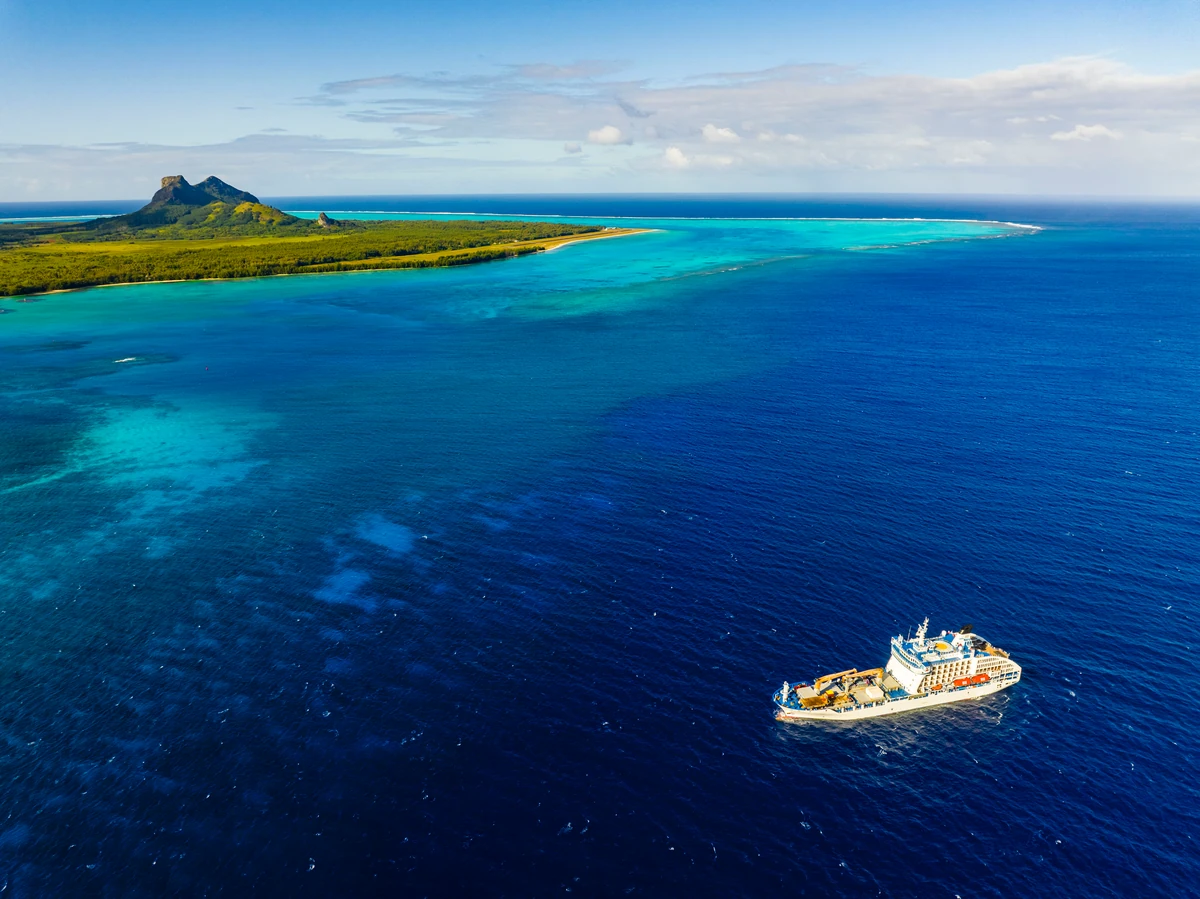
From Mutiny to Escape
HMS Bounty left England in 1787 under the command of William Bligh. Her mission was to collect breadfruit seedlings in Tahiti for the plantations of the West Indies. After five months in Tahiti, the ship put back to sea in April 1789.
On April 28, 1789, off the island of Tofua in Tonga, Fletcher Christian led the mutiny on the Bounty. Bligh and 18 loyal men were set adrift in the ship's launch. They reached Timor after more than 6,500 kilometers (3,500 nautical miles) and 47 days at sea.
Twenty-five men stayed on board, 21 of them mutineers. The other four had taken no part in the uprising, and three of them could not fit into the overcrowded launch. The rest of the story is told in our article on the Bounty mutiny and the Pitcairn Islands.
An Island Picked From Bligh's Charts
The day after the mutiny, Christian set a course for Tubuai. Tahiti was out of the question, since the Royal Navy was bound to search for the ship there. James Cook had sighted the island on August 8, 1777, and its position was on the ship's charts.
The island of Tubuai had everything the mutineers needed. It lay off the known sea routes, its soil was fertile and its reef made any approach difficult. James Morrison, the boatswain's mate, put its population at around 3,000.
Three Months on Tubuai, From Bloody Bay to Fort George
The mutineers' attempt to settle quickly turned into conflict. Between late May and mid-September 1789, they sailed to Tahiti and back, built a fort and clashed with the island's chiefdoms.
Bloody Bay, a Violent First Contact
The Bounty anchored in the bay off Tāvana beach, on the north side of the island. The next day, women came aboard while some fifty canoes full of men closed in around the ship.
The encounter turned violent. Islanders threw stones, the Bounty's crew answered with muskets and twelve islanders were killed. The bay has been known as Bloody Bay, Baie Sanglante in French, ever since.
Unable to settle peacefully, the mutineers headed back to Tahiti for supplies, livestock and companions. They returned in June 1789 with animals and a group of Tahitian men and women.
Fort George, a Square Fort on the Lagoon
This time, Christian settled at Natieva, north of today's village of Taahuaia, on the northeast coast. The family of chief Tahuhuatama welcomed him onto its land, facing the beach where the ship lay at anchor.
Work on Fort George began on July 10, 1789. According to Morrison's journal, the fort was a square about 100 meters (330 feet) on each side, surrounded by a ditch 6 meters wide and 7 meters deep.
Earth from the ditch formed a rampart topped with a wooden palisade. A drawbridge faced the beach, and the ship's guns were mounted at the corners and in the middle of each wall.
The Battle of Paorani and the Departure
Tensions grew fast. Several mutineers wanted to take women by force, and the group itself split apart.
The decisive clash took place at Paorani, against the warriors of chief Tinirau. According to Morrison, 66 people of Tubuai lost their lives.
On September 17, 1789, the mutineers abandoned the fort and left the island. Their stay on Tubuai had lasted less than four months, including the trip to Tahiti.
After Tubuai, From Tahiti to Pitcairn
Back in Tahiti, sixteen men chose to stay. Two of them died before the frigate Pandora, sent by the Admiralty, reached Tahiti on March 23, 1791, and the fourteen survivors were arrested.
Fletcher Christian sailed on with eight mutineers and a group of Polynesian men and women. They reached Pitcairn on January 15, 1790, and burned the Bounty on January 23. Descendants of the mutineers still live on the island, which the Aranoa visits on its Pitcairn and Gambier cruise.
Traces of the Mutiny on Tubuai Today
More than two centuries later, the episode has left few stones but plenty of names and one site. The fort's grounds are among the island's historical sites open to visitors, and the bay of the first clash now welcomes them ashore.
The Fort George Site
Nothing remains of the original Fort George, destroyed and lost over time. The site, on private land, lies in Taahuaia.
Its owners cleared it in 2013, and a memorial sign went up in 2015. In 2018, part of the wall was rebuilt in ironwood, following Morrison's description. Since 2023, a cultural space open to the public has told the story of the site and kept its memory alive.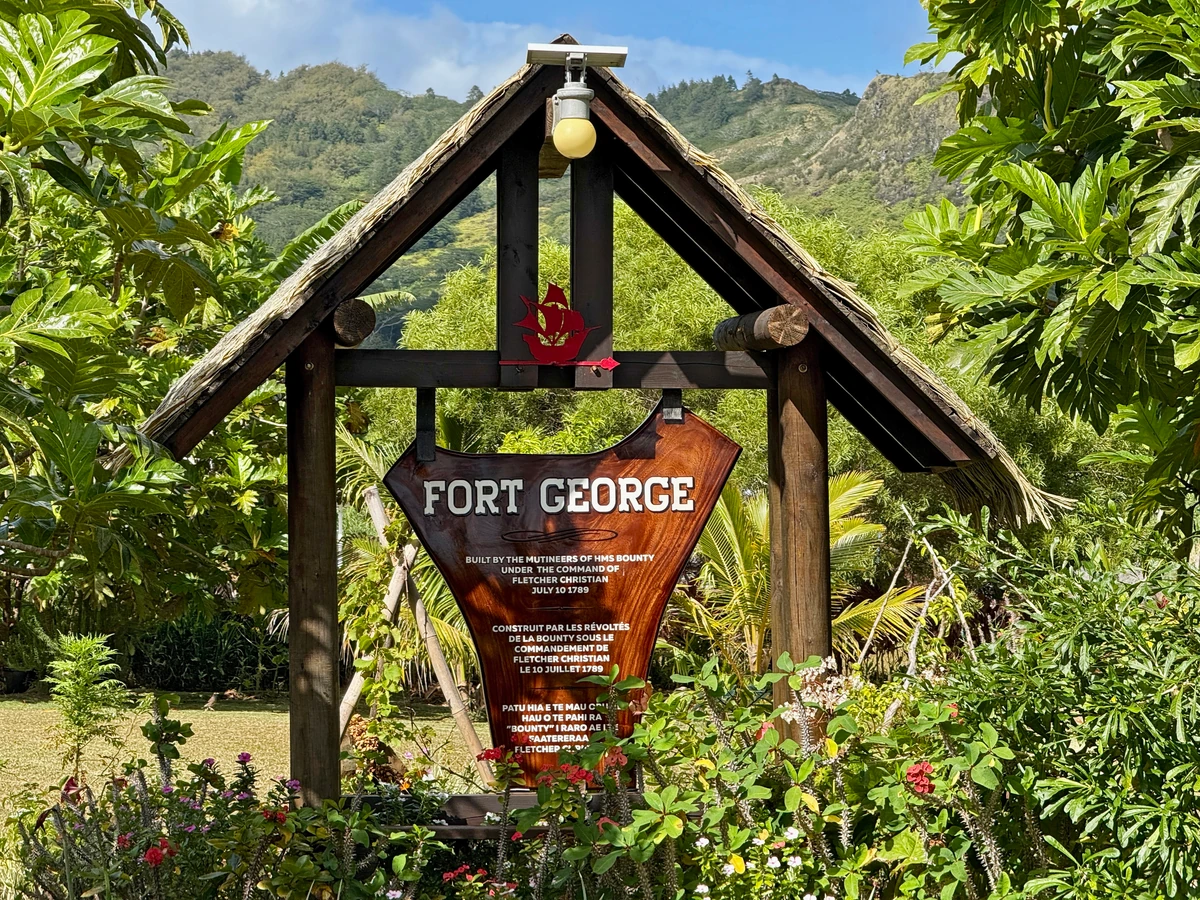
A Memory Kept in Names and Numbers
Bloody Bay still recalls the first clash. The names of the chiefs of the time, Tahuhuatama, Tamatoa and Tinirau, have come down to us through Morrison's journal, the main source on this episode.
Contact with Europeans also came at a lasting cost. Morrison estimated the population of Tubuai at 3,000. A few decades later, missionaries counted no more than 300, struck down by diseases against which they had no immunity.
Discovering Tubuai Beyond the Bounty Story
Tubuai, Tupua'i in Tahitian, is not an open-air museum. It is the largest island in the Austral Islands and the archipelago's administrative center in French Polynesia, a farming island that lives by its crops and its lagoon.
A Volcanic Island With a Cooler Climate
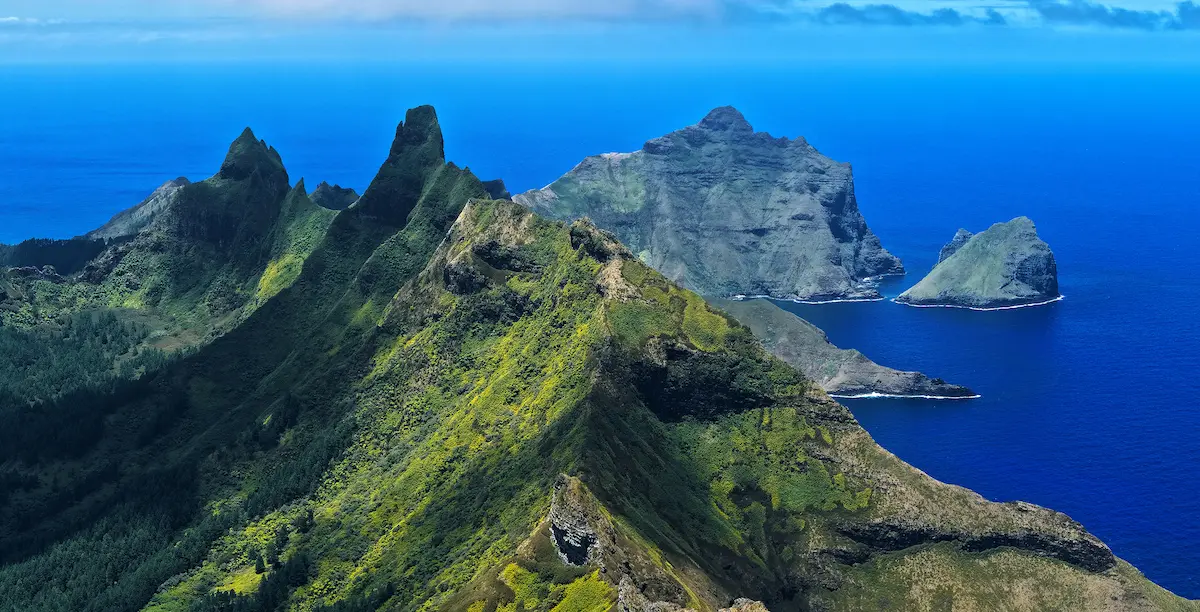
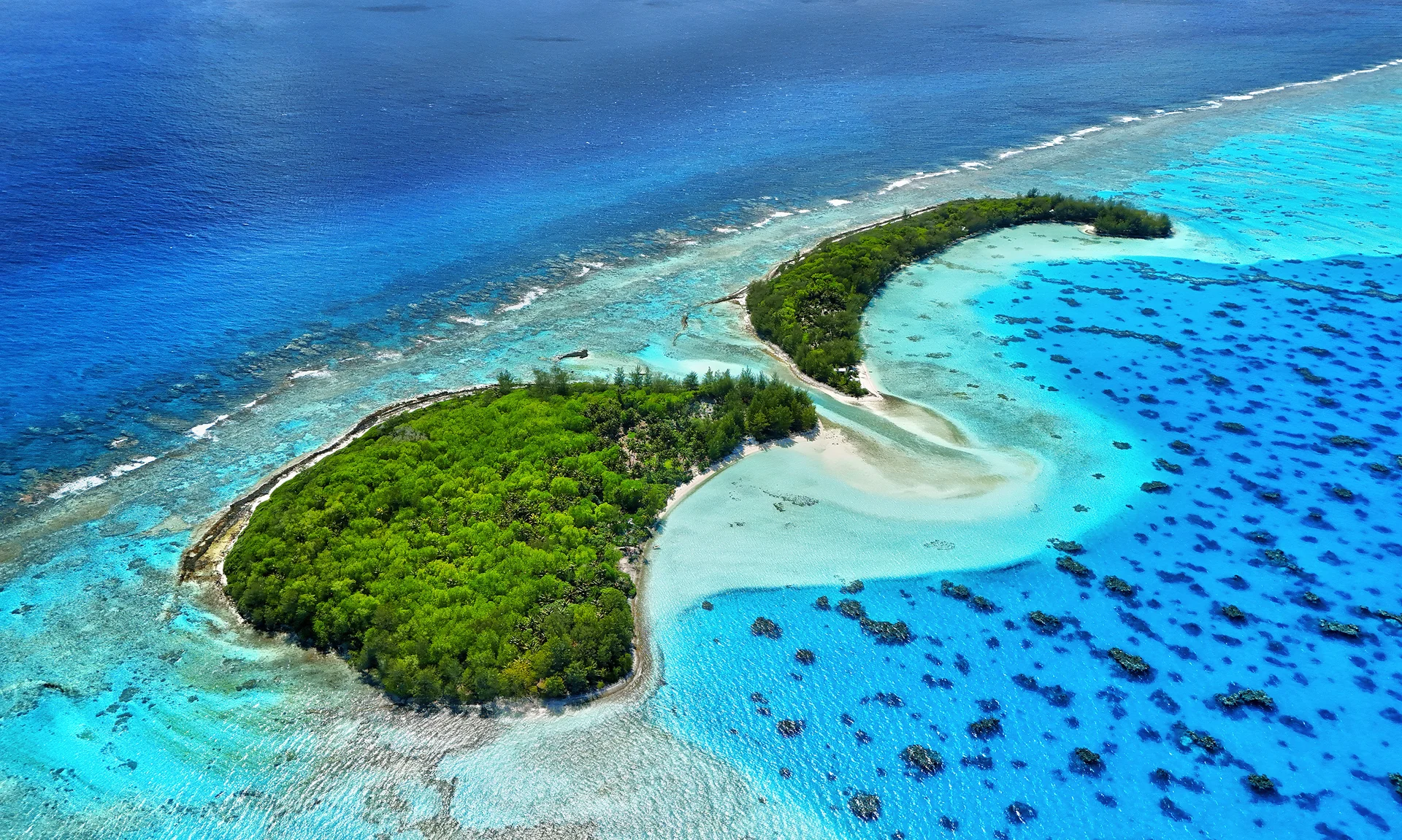
Volcanic in origin, Tubuai Island covers 45 km² (17 square miles) and rises to 422 meters (1,385 feet) at Mount Taitaa. Its turquoise lagoon, 85 km² in size, is almost twice as large as the island and ringed by a coral reef dotted with white-sand islets, or motus.
The climate is noticeably cooler than in Tahiti, averaging 20 to 25 °C, which supports lush vegetation. The fertile soil is ideal for growing cabbage, lettuce and potatoes.
The road around the island links Tubuai's three villages, Mataura, the main village, Taahuaia and Mahu, home to about 2,200 people.
Lagoon, Marae and Crafts
Unlike the Marquesas, which have no lagoon, Tubuai is a place to swim. The shallow Tubuai lagoon is ideal for snorkeling and a well-known spot for kitesurfing and other water sports. Hiking trails lead to the summit of Mount Taitaa, one of the island's favorite outings.
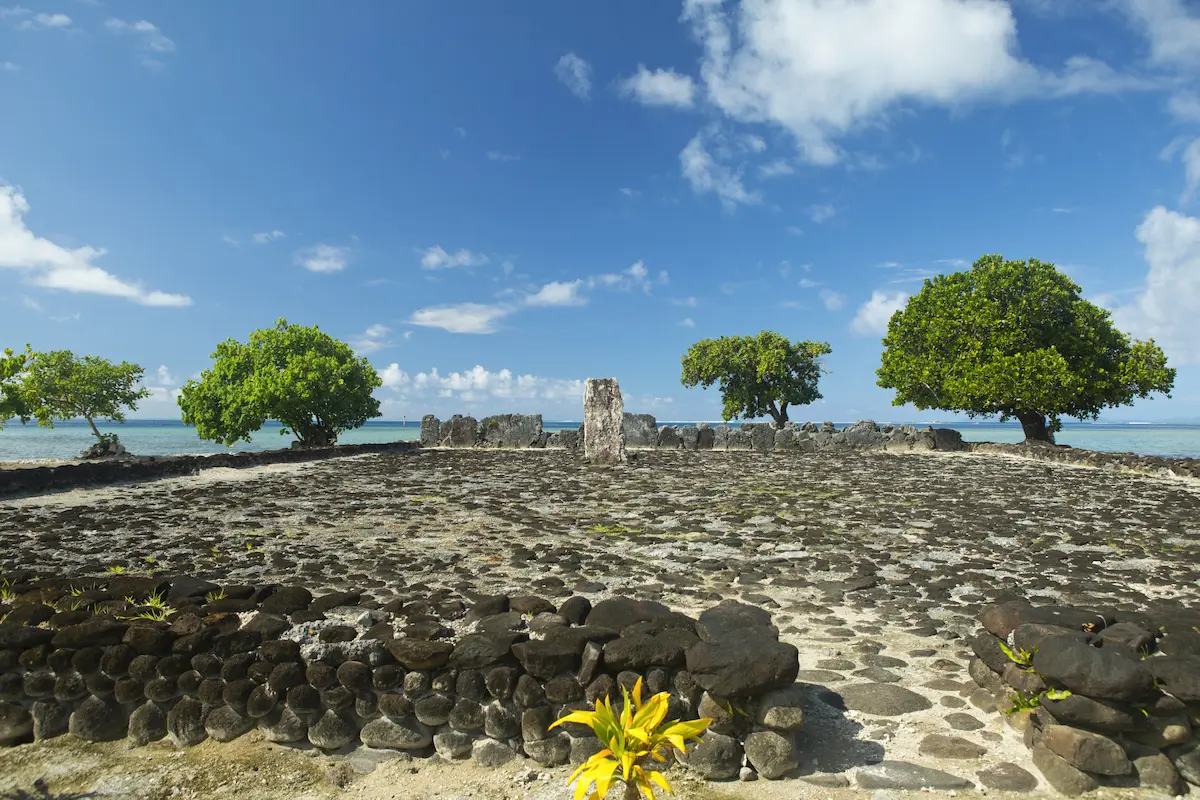
Several marae, the ancient Polynesian places of worship, dot the island, including Hari Ta'ata and Vaitauarii. Tubuai's craftspeople weave pandanus and make shell necklaces, two skills specific to the island.
Tubuai With the Aranoa: Two Calls on the Same Cruise
Starting in March 2027, the Aranoa will sail 13-day expedition cruises to the Austral Islands from Papeete. One unusual feature of the itinerary is that the ship stops at Tubuai twice, a few days apart.
A Passenger-Cargo Ship With Stabilizers
Like the Aranui 5, the Aranoa will be a passenger-cargo ship. It will carry up to 1,500 metric tons of freight to the islands and 198 passengers in 91 cabins, 62 of them with a balcony.
Unlike the Aranui 5, it will be fitted with stabilizers, which reduce rolling at sea. The first departure is scheduled for March 6, 2027.
First Call: Bloody Bay and the Marae
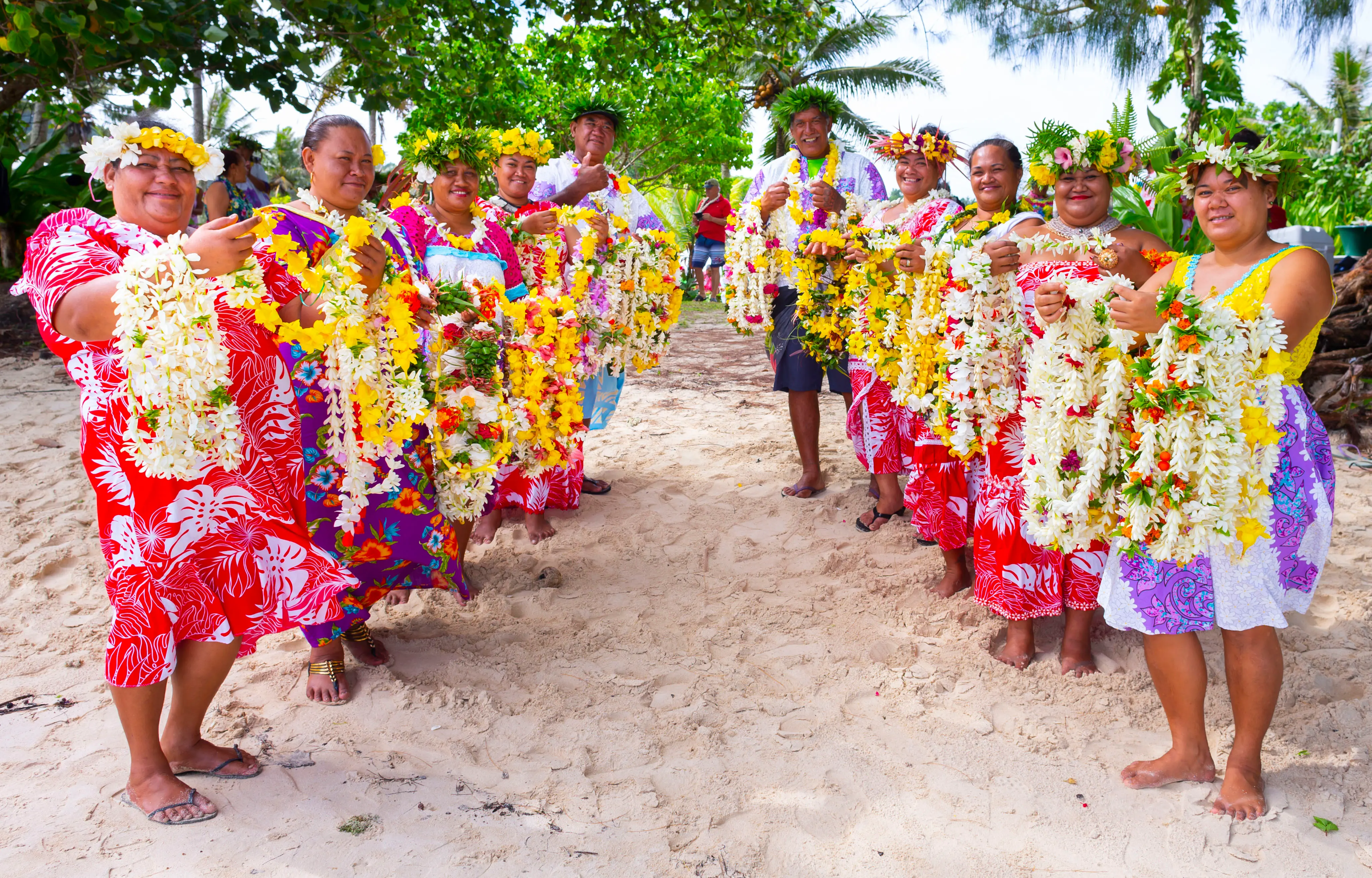
Barges bring passengers ashore at the Bloody Bay landing, the very beach of the first clash of 1789. They are welcomed at the town hall with music and flower crowns.
The program includes weaving demonstrations and a truck tour of the Hari Ta'ata marae and the bay. Lunch is served on board, then the beach is ideal for snorkeling. Scuba diving is optional, booked on board at an extra cost.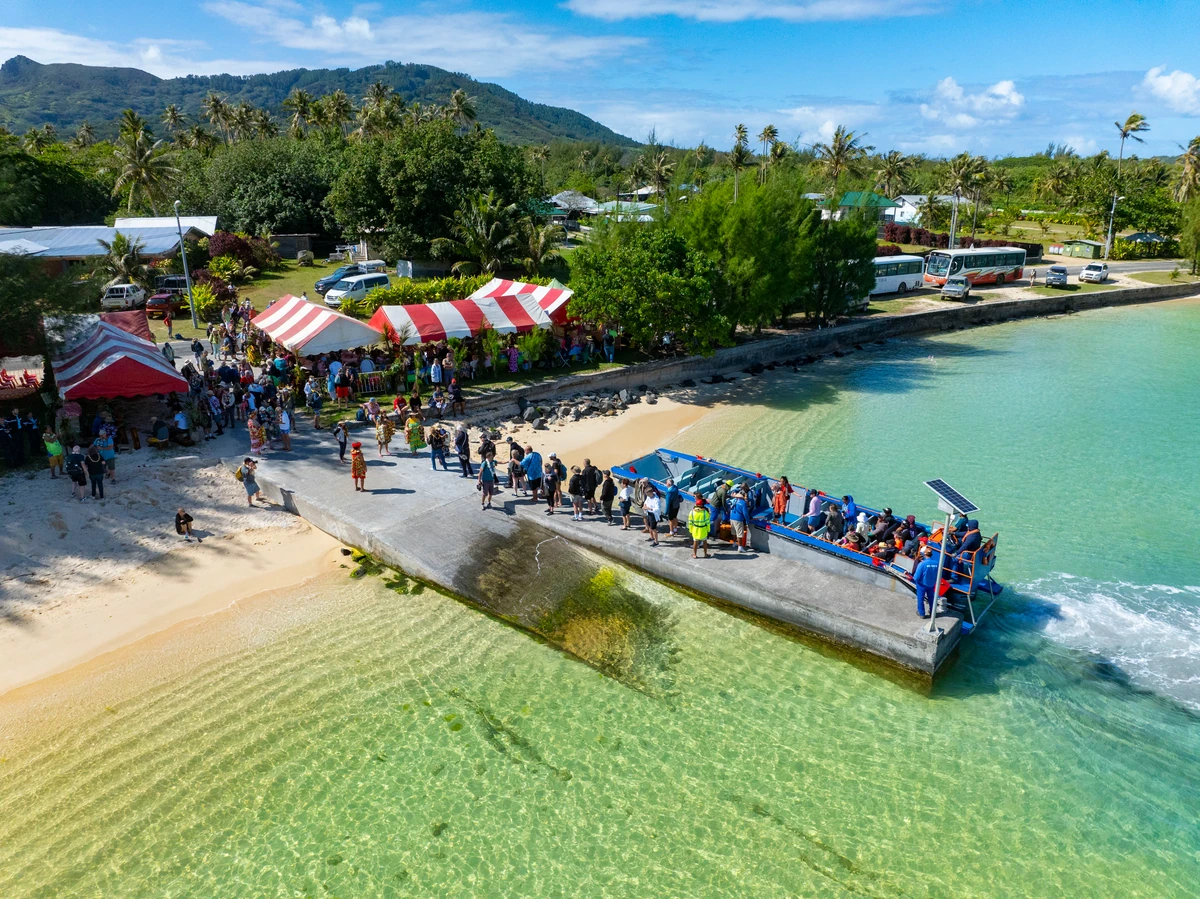
Second Call: In the Mutineers' Footsteps at Fort George
On the second visit, a truck takes passengers to the Vaitauarii marae, the Fort George site and the battlegrounds of 1789. A barbecue and a swim round off the call, with diving again offered as an option.
As everywhere on the route, time ashore depends on cargo operations. During the day at sea before the Austral Islands, talks on the archipelago's culture help passengers prepare for the visits.
| Day | Cruise without Rapa | Cruise with Rapa |
|---|---|---|
| 1 | Papeete, Moorea | Papeete, Moorea |
| 2 | At sea | At sea |
| 3 | Rimatara | Rimatara |
| 4 | Rurutu | Rurutu |
| 5 | Rurutu | Tubuai |
| 6 | Tubuai | Raivavae |
| 7 | Raivavae | Raivavae |
| 8 | Raivavae | Rapa |
| 9 | Tubuai | Tubuai |
| 10 | Maupiti or Huahine | At sea |
| 11 | Raiatea | Raiatea |
| 12 | Bora Bora | Bora Bora |
| 13 | Back in Papeete | Back in Papeete |
The 2027 itineraries are indicative and may change with the weather. Dates and fares are kept up to date on the sailing schedule.
Tubuai and the Other Austral Islands Stops
Tubuai is just one stop in the least-visited archipelago of French Polynesia. Each island on the Austral Islands cruise has its own character:
- Rimatara, home of the endangered Rimatara lorikeet, the 'ura;
- Rurutu, the island of caves, where humpback whales can be seen from July to October;
- Raivavae, the secret jewel of the Austral Islands, known for its lagoon;
- Rapa, the southernmost island, cut by deep bays that resemble fjords, included in six cruises in 2027;
- Raiatea and Bora Bora at the end of the cruise, with Maupiti or Huahine on some departures.
To choose your travel dates, read our guide on when to go to the Austral Islands, then the one on how to visit the Austral Islands.
Tubuai, the Bounty Mutineers' First Refuge
Tubuai has no grand monument to the Bounty. The story of 1789 is written into its landscape, from Bloody Bay to the rebuilt fort at Taahuaia and the lagoon the mutineers left for Tahiti, then Pitcairn.
On a trip to Tubuai with the Aranoa, the island is visited twice, at the pace of a passenger-cargo ship that supplies the archipelago. It is a way to discover French Polynesia through its quietest islands, alongside a Polynesian crew.
Frequently Asked Questions
Where is Tubuai and how do you get there?
Tubuai is part of the Austral Islands, in French Polynesia, south of Tahiti in the South Pacific Ocean. Getting to Tubuai by air means an Air Tahiti flight from Papeete to Tubuai airport, and the island has a few family guesthouses. From 2027, it will also be a port of call for the Aranoa.
When is the best time to visit Tubuai?
The cool, dry season, from May to October, brings 20 to 25 °C (68 to 77 °F) and calmer seas. From July to October, humpback whales gather around the Austral Islands. From November to April, the warm season reaches 25 to 28 °C (77 to 82 °F), with short showers.
What happened to the mutineers on Pitcairn?
The small colony tore itself apart within a few years through disease and violence. When the American whaler Topaz reached Pitcairn in February 1808, John Adams was the only mutineer still alive, leading a community of women and children.
Which films tell the story of the mutiny on the Bounty?
Two films are titled Mutiny on the Bounty, Frank Lloyd's 1935 version with Clark Gable and Lewis Milestone's 1962 version with Marlon Brando. Roger Donaldson later directed The Bounty in 1984.
What does an Aranoa cruise fare include?
The fare includes accommodation on board, three meals a day, one bottle of wine for four people at meals on board, lunches at local restaurants, the guided excursions in the program and cultural shows.
Flights, alcoholic drinks, tips, Wi-Fi, which is charged, and optional activities such as diving are not included.
Explore French Polynesia with our cruises:
Read also