
Discover the Islands of French Polynesia

Exploring the Islands of French Polynesia: 118 Lands Across the Pacific
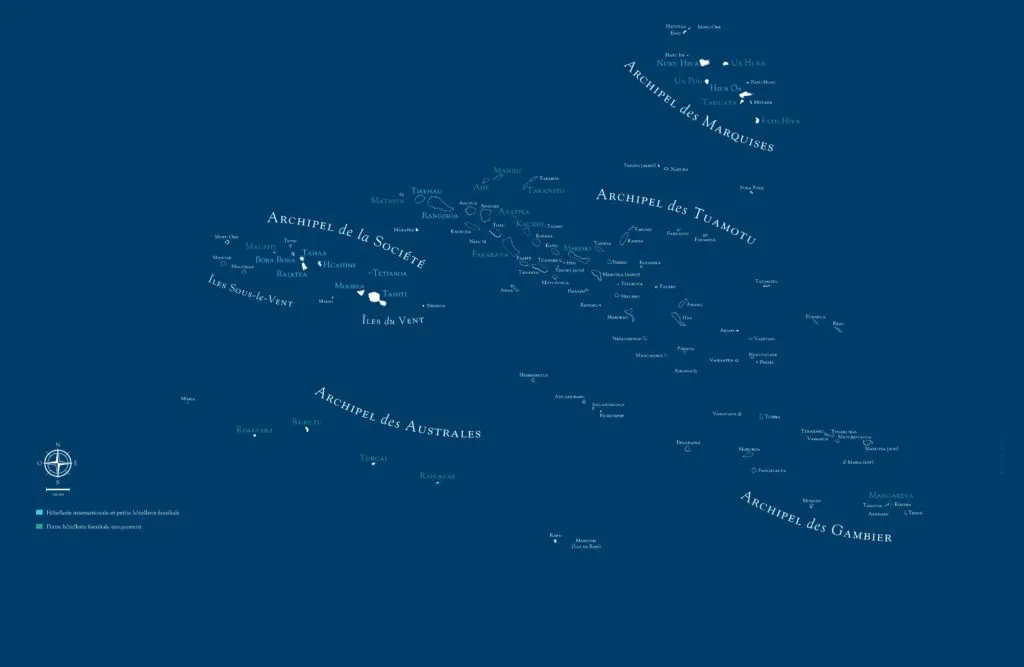
French Polynesia is home to 118 islands and atolls scattered across nearly 5 million square kilometers in the South Pacific, a maritime area comparable in size to Europe. These lands, some volcanic and some coral, are organized into five distinct archipelagos: the Society Islands, the Marquesas, the Tuamotus, the Austral Islands and the Gambier Islands. Each has its own character, landscapes, culture and history.
Of these 118 islands, only 76 are inhabited. The rest remain pristine natural sanctuaries, accessible only by sea. It is this vastness, this singular relationship between ocean and land, that makes French Polynesia a destination like no other. And it is by sea, as the ancient Polynesian navigators did, that one best understands this territory. All our cruises in Polynesia depart from and return to the island of Tahiti, the ideal starting point for exploring each archipelago.
THE 5 ARCHIPELAGOS OF FRENCH POLYNESIA
Today, French Polynesia encompasses five archipelagos in the heart of the great ocean, spread across nearly five million square kilometers. An area as vast as Europe, realm of great whales and ocean depths still untouched. Dry land is scarce here: while all the high islands are inhabited, barely half of the Tuamotu atolls are, fragile ribbons of land set upon the ocean. Reaching them by sea is an experience of pure emotion. It is perhaps the most precious lesson one can take from a journey to the ends of the earth: land here is nothing without the sea.
The Society Islands
The Society Islands are the best-known and most populated archipelago in French Polynesia. They owe their name to Captain James Cook, who named these islands of French Polynesia in honor of the Royal Society of London, which funded his first voyage in 1769. The archipelago comprises 14 islands, divided into two groups: the Windward Islands to the east and the Leeward Islands to the west.
The Windward Islands include Tahiti, Moorea, Maiao, Mehetia and the atoll of Tetiaroa. Tahiti, the largest island in French Polynesia, is home to the capital Papeete, the international airport and the majority of the territory's economic and administrative activity. The Society Islands alone account for approximately 87% of the Polynesian population, over 243,000 inhabitants.
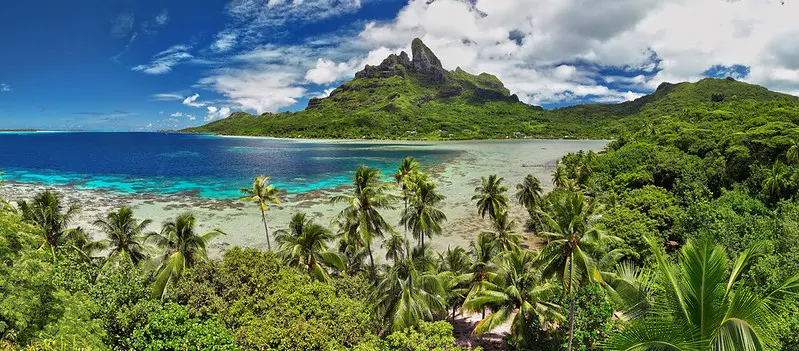
The Leeward Islands, more preserved, rank among the most iconic destinations in the Pacific: Bora Bora and its lagoon of infinite blue hues, Huahine and its archaeological sites, Raiatea, the spiritual cradle of Polynesian culture, Tahaa, Maupiti, as well as the atolls of Manuae, Maupihaa, Motu One and Tupai.
All Aranui cruises depart from Tahiti. Discover our Tahiti cruise for a first glimpse of this archipelago before setting off to explore the most remote islands of French Polynesia.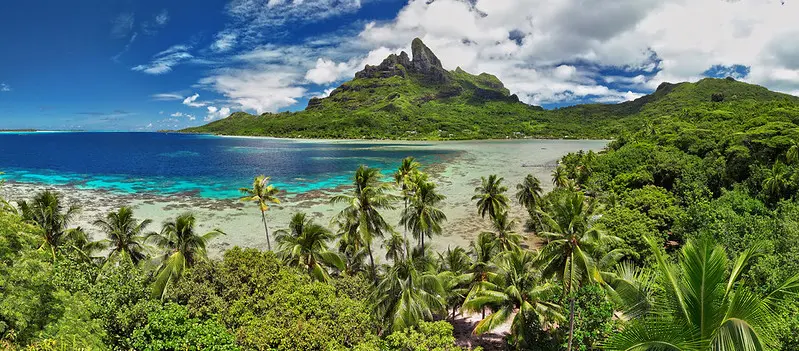
The Marquesas Islands
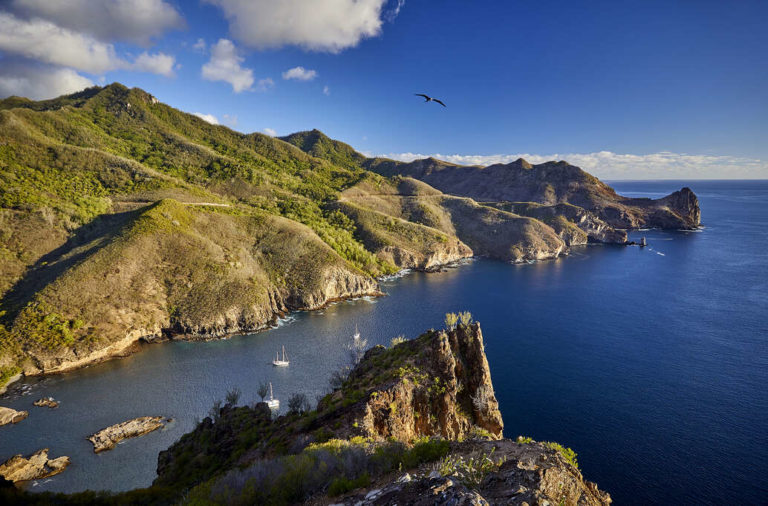
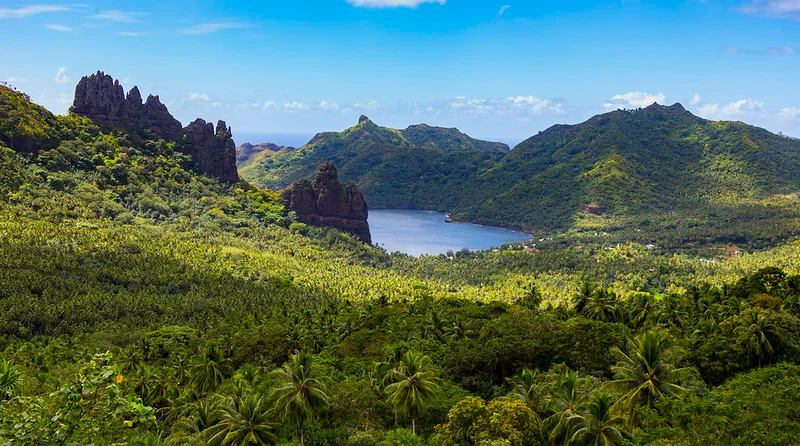
Located 1,500 kilometers northeast of Tahiti, the Marquesas Islands form the northernmost archipelago in French Polynesia. The Marquesans call them Te Henua Enata, the "Land of Men." Here, there is no lagoon or coral reef: the islands rise directly from the ocean, with towering cliffs, deep valleys and dense vegetation.
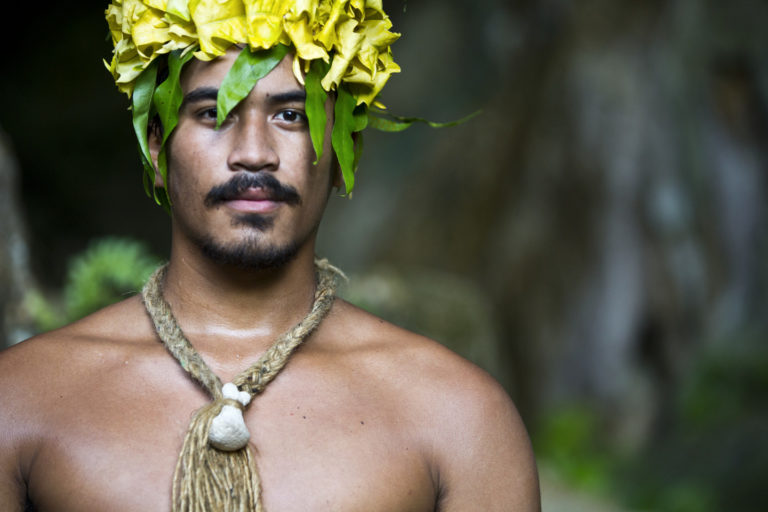
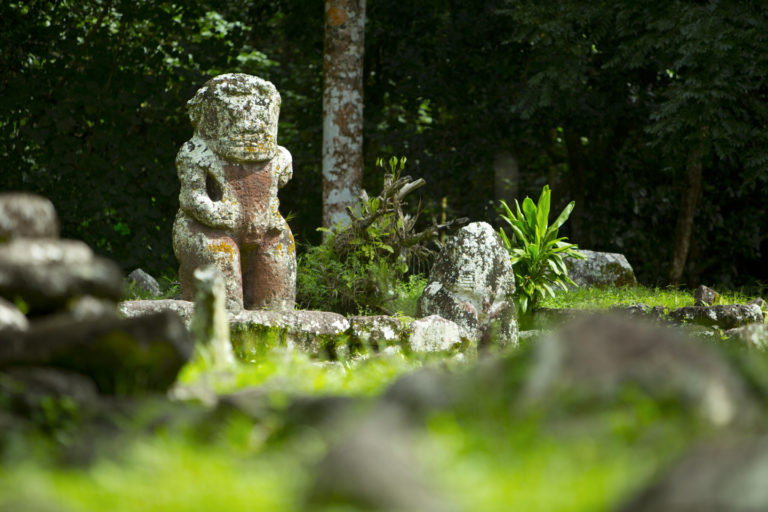
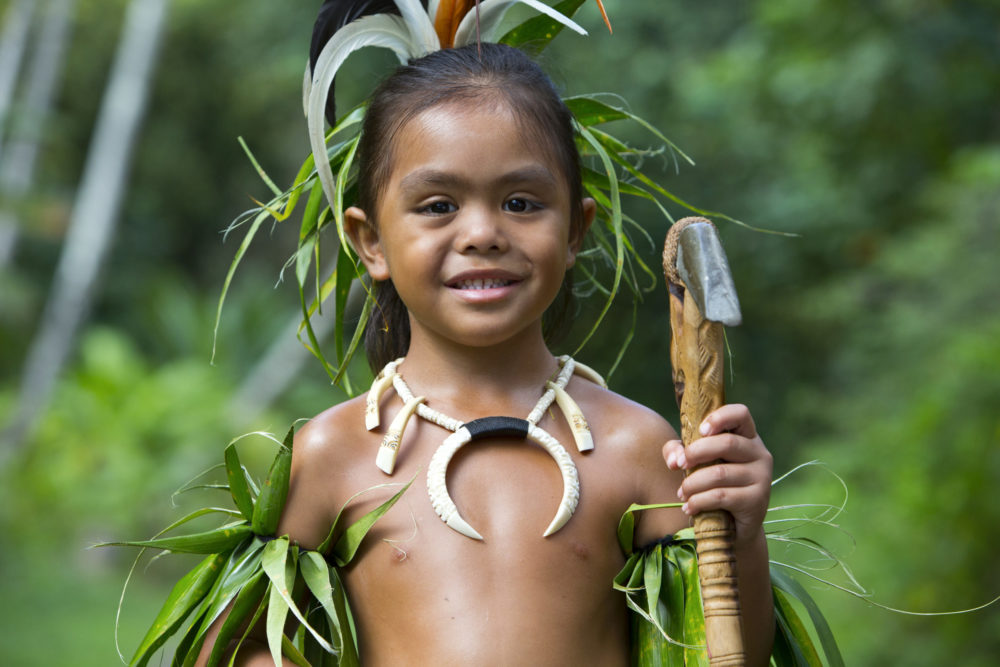
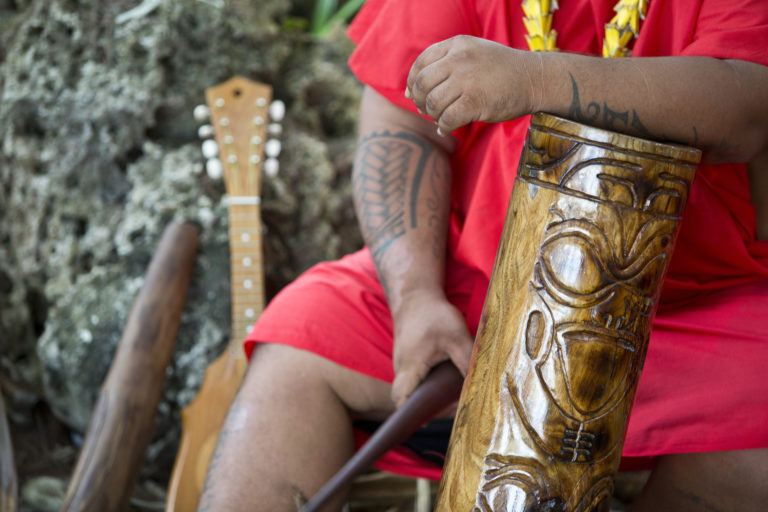
The archipelago comprises 12 islands, of which 6 are inhabited: Nuku Hiva, Ua Pou, Ua Huka, Hiva Oa, Fatu Hiva and Tahuata. Its 9,350 inhabitants occupy an area of approximately 1,000 km². The Marquesas have their own language, their own culture and a strong identity, distinct from the rest of Polynesia. The Marquesan tattoo, recognized worldwide, is the expression of an ancestral tradition that remains very much alive. The archaeological sites are among the most impressive in the Pacific, notably the great stone tiki of Hiva Oa and the ceremonial grounds of Nuku Hiva.
It is this powerful and mystical land that inspired artists such as Paul Gauguin and Jacques Brel, both buried on Hiva Oa. In 2024, the Marquesas were inscribed as a UNESCO World Heritage Site, recognizing the outstanding value of their landscapes and culture.
The Marquesas cruise remains the most complete way to discover this archipelago. The Aranui, both cargo ship and cruise vessel, connects Tahiti to all six inhabited islands, continuing the vital role the ship plays in island life.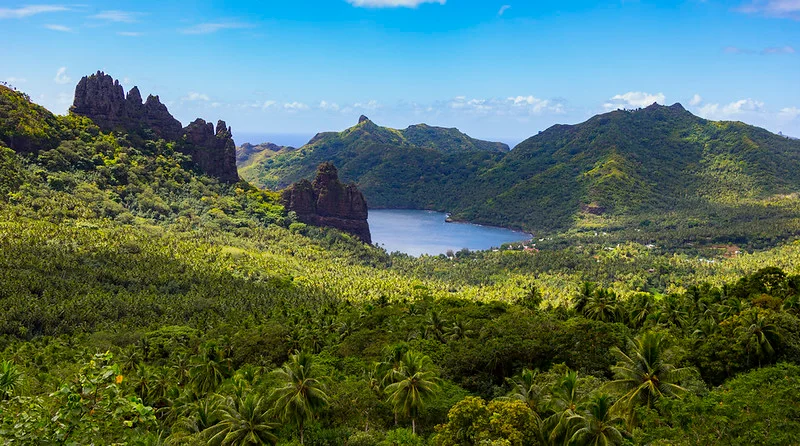
The Tuamotu Islands
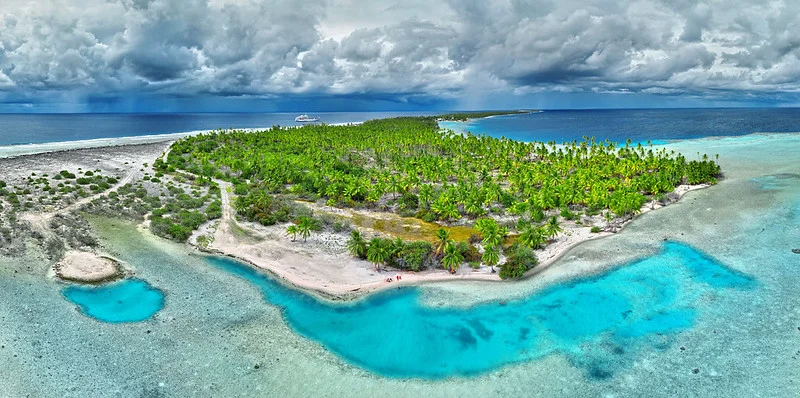
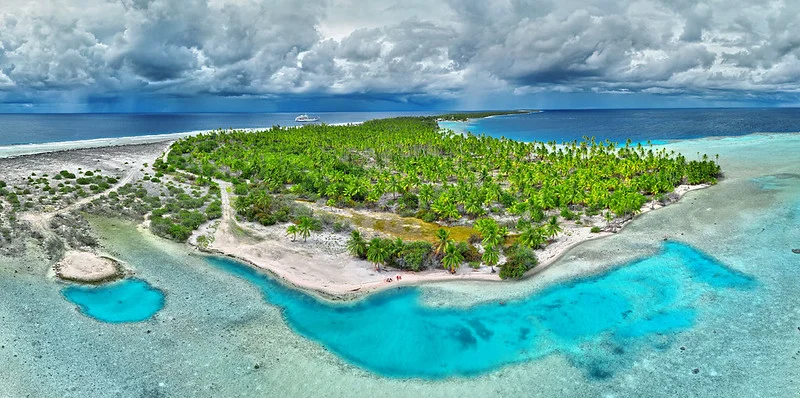
The Tuamotu Islands form an archipelago of 76 coral atolls scattered across more than one million square kilometers of ocean. These atolls, the largest in the world, rise only a few meters above sea level. The total land area barely reaches 775 km² for a population of 15,460.
The best-known atolls are Rangiroa, one of the largest atolls in the world with its immense lagoon, Fakarava, designated a UNESCO Biosphere Reserve for the exceptional richness of its marine life, and Tikehau, renowned for its crystal-clear waters.
The Tuamotu economy relies on two resources: copra and the Tahitian black pearl, cultivated in lagoon pearl farms. For travelers, the Tuamotus are a diving paradise: sharks, manta rays, dolphins and schools of colorful fish populate the passes and lagoons.
Reaching the Tuamotus by sea, as the inhabitants have always done, allows one to experience the vastness of the ocean and the fragility of these lands. The Aranui calls at the Tuamotus on several of its itineraries departing from Tahiti.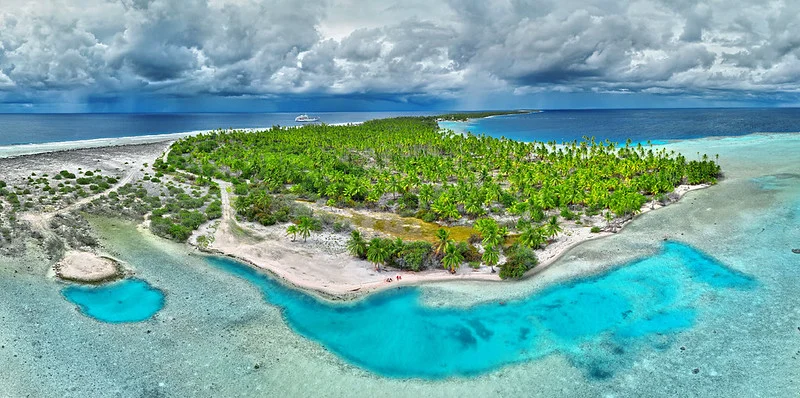
The Austral Islands
Located 600 kilometers south of Tahiti, the Austral Islands form the southernmost and most secretive archipelago in French Polynesia. Cooler than the rest of the territory, this archipelago enjoys a mild climate and lush green landscapes that contrast sharply with the typical tropical image.
The archipelago comprises seven islands, of which five are inhabited: Rurutu, Tubuai, Raivavae, Rimatara and Rapa. With fewer than 7,000 inhabitants spread across roughly 150 km² of land, the Austral Islands have remained untouched by mass tourism.
Each island has its own personality. Rurutu is famous for its spectacular limestone caves and for humpback whale watching, as the whales come to breed there between July and November. Tubuai, the largest island in the archipelago, offers rolling agricultural landscapes and an extensive lagoon. Raivavae is often compared to Bora Bora for the beauty of its lagoon, but without the tourist development. Rimatara, the smallest inhabited island, is home to the vini 'ura, an endemic red-feathered lorikeet threatened with extinction. Rapa, the most isolated island perched at the far south, preserves the remains of ancient fortifications unique in Polynesia.
The Austral Islands are also known for their craftsmanship, particularly pandanus weaving and basketry, considered among the finest in French Polynesia. The culture there is vibrant, rooted in traditions preserved by isolation.
In 2027, the Aranoa, the newest ship in the Aranui fleet, will offer cruises dedicated to the Austral Islands. This will be a unique opportunity to discover this pristine archipelago by sea, in unprecedented comfort for this destination.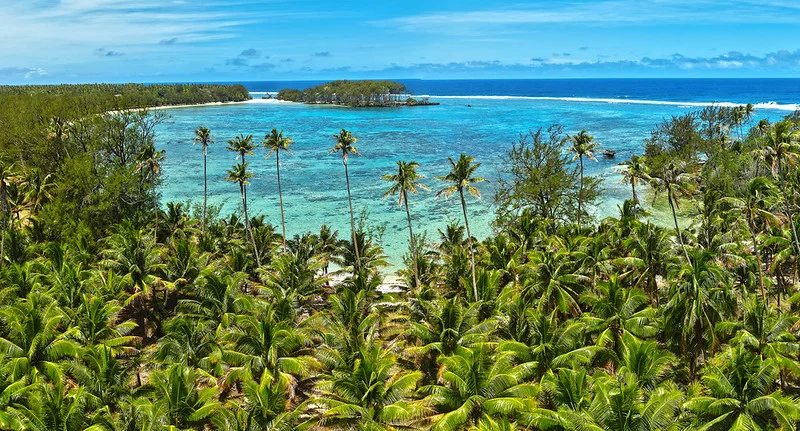
The Gambier Islands
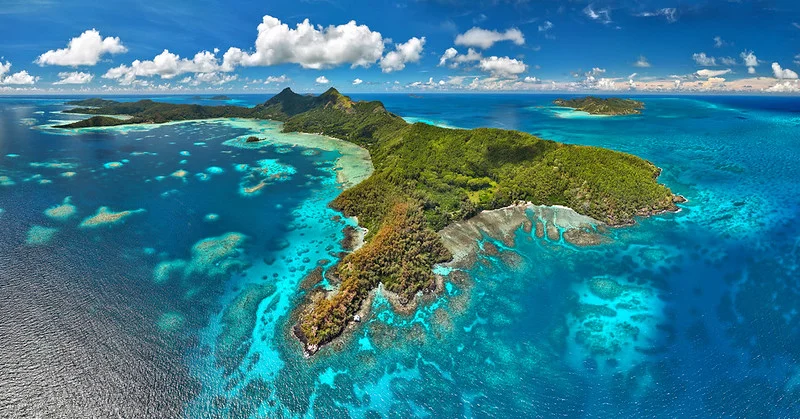
Located 1,650 kilometers southeast of Tahiti, at the far end of the Tuamotu arc, the Gambier Islands form the most isolated archipelago in French Polynesia. It consists of eight high islands (Mangareva, Aukena, Akamaru and Taravai being the main ones) surrounded by a single vast lagoon, along with a few islets and the atoll of Temoe.
The Gambier are home to approximately 1,400 inhabitants across a total land area of 23 km². Their isolation has preserved an authentic character and a rare tranquility. The great lagoon enclosing all the islands makes it one of the most important pearl farming sites in French Polynesia.
The archipelago also stands out for its architectural heritage left by Catholic missionaries. Between the 1830s and 1870s, Fathers Caret and Laval undertook the construction of a remarkable ensemble of religious buildings, including the Cathedral of Saint Michael in Rikitea, the largest religious building in French Polynesia. These monuments, built with coral and island stone, bear witness to a singular chapter in the history of the Pacific.
The Aranui calls at the Gambier on some of its itineraries, offering one of the rare ways to reach this remote archipelago.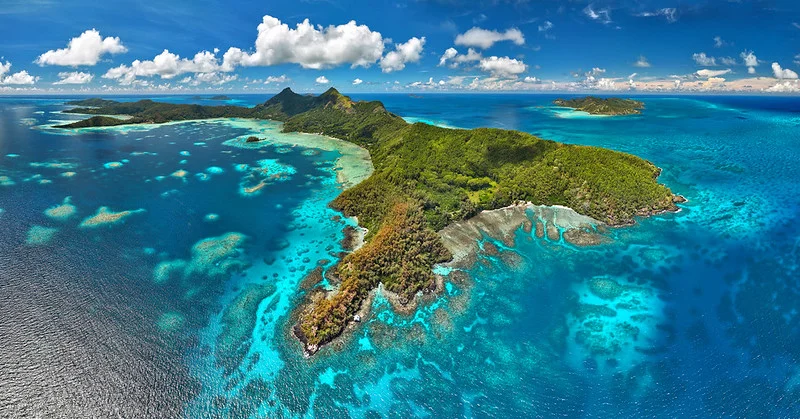
Beyond the 5 Archipelagos: the Cook Islands and Pitcairn
Aranui itineraries extend beyond the five archipelagos of Polynesia. The ship also offers cruises to neighboring destinations in the South Pacific.
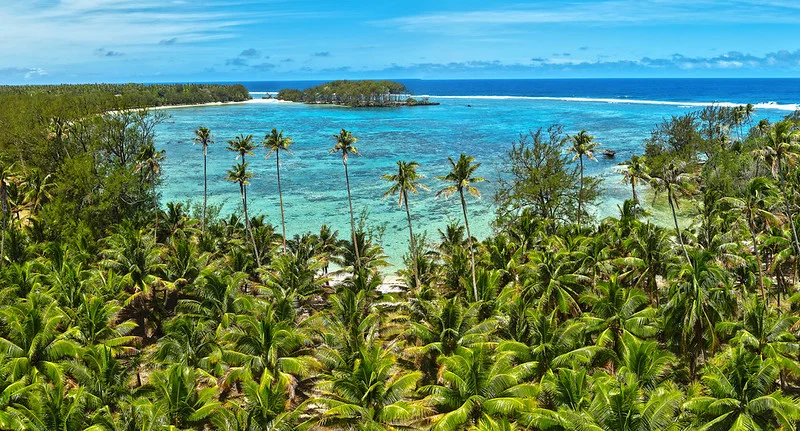
The Cook Islands, located west of French Polynesia, share close cultural and linguistic ties with the Society Islands. Rarotonga and Aitutaki rank among the most beautiful islands in the Pacific. The Aranui offers cruises linking French Polynesia to the Cook Islands, a crossing that retraces the ancient Polynesian navigation routes.
Pitcairn Island, east of the Gambier, is one of the most isolated territories in the world. Home to around fifty inhabitants, descendants of the Bounty mutineers, Pitcairn is a rare and history-laden port of call. The Aranui is one of the only ships to call there regularly.
Tahiti and Its Islands, in the Beginning
When nothing existed, Ta'aroa, the creator god, was alone and swam in the void. From this void he created all things: rain, storm and ocean. After that, the great foundations of the earth took shape, then the gods, then mankind. The ocean is everything to the Polynesians. It nourishes and reassures. It also terrifies, when its unleashed waters sweep over the coasts beyond the protective reef. If the ocean takes, it also brings: seeds, plants, vessels, new people. For the Polynesians, the ocean is a language. It is a bond.
After the ancient Polynesians conquered the lands that populate this ocean of islands, from Fenua Enata (Marquesas) to Hawaii in the north, Mangareva (Gambier) and Rapa Nui (Easter Island) in the east, Aotearoa (New Zealand) in the southwest, Polynesian civilization developed at the heart of what came to be called the Polynesian Triangle. The ancients had organized a vast network of exchanges between the archipelagos, long before the Europeans arrived in the Pacific with Magellan (1521), Wallis (1767), Bougainville (1768) and Cook (1769).
Through treaties in the 19th century, 118 islands and atolls became French, forming French Polynesia as we know it today. The South Pacific now harbors the largest natural oceanic reserves in the world, including biosphere reserves such as Fakarava and the Marquesan marine educational areas.
All Aranui cruises depart from and return to the island of Tahiti, where Tahiti-Faa'a International Airport is located.
Explore the islands of French Polynesia aboard the Aranui. View our sailing schedule and rates or request your free brochure to plan your cruise.