How to visit the Austral Islands: A complete guide to transport and travel.

16/08/2026
Getting to the Austral Islands takes planning. This guide weighs up Air Tahiti flights, the supply cargo ship and the Aranoa, due in March 2027, and explains what each means for your time, budget and independence.
More than 500 km south of Tahiti, the Austral Islands do not give themselves up easily. No international flights, short runways, a swell that occasionally decides the schedule: a trip to visit the Austral Islands is planned months ahead.
These five inhabited islands are among the last places where the journey matters as much as the destination. The question is which route to take, and which one actually suits the way you travel.
How do you get to the Austral Islands from Tahiti ?
Only three routes currently reach the archipelago, and all of them start in Papeete. Flying, with Air Tahiti, serves four of the five islands in one to two hours.
The supply cargo ship carries a handful of passengers on rotations lasting ten to fourteen days. It remains the only regular way to reach Rapa.
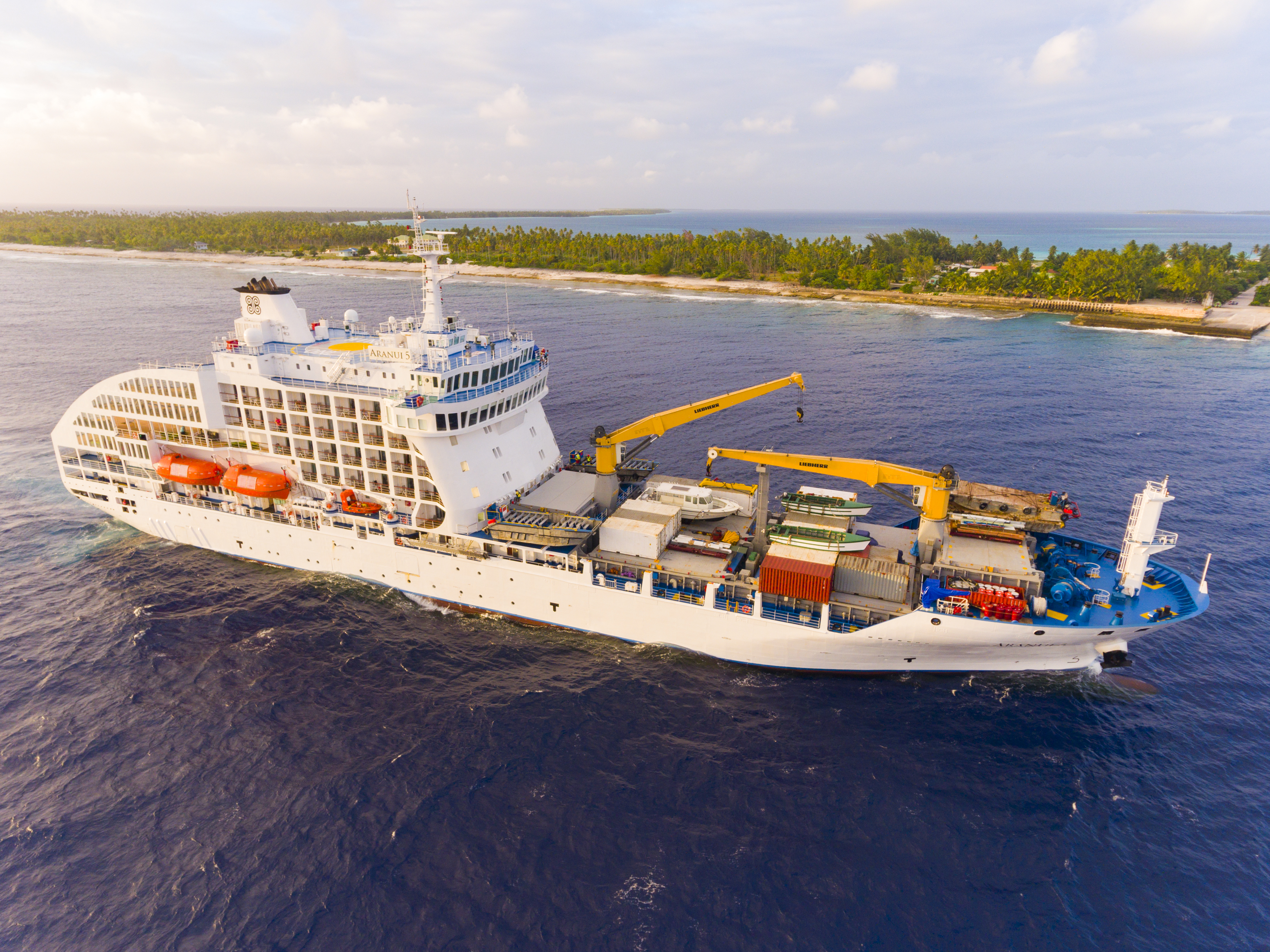
From March 2027, the Aranoa, Aranui Cruises' new mixed cargo-passenger vessel, will offer a third maritime option built around a full circuit of the archipelago.
None of these solutions is interchangeable. Getting to the Austral Islands comes down to a trade-off between the time you have, the budget you are willing to commit and how much organising you are prepared to do yourself.
The Austral Islands, an archipelago scattered over 1,300 km
The remoteness of the Australs is not an impression, it is a geographical fact that shapes everything else. Sitting at the southernmost tip of French Polynesia, the archipelago stretches across more than a thousand kilometres of ocean.
That dispersal explains both how unspoilt the islands remain and how hard they are to link together.
Five inhabited islands, five different realities of access
Each island has its own identity, landscapes and level of service. The distances below are measured from Tahiti.
- Rurutu: around 570 km south of Tahiti, one of the best-served islands, known for its limestone caves and for the humpback whales that pass between July and October.
- Tubuai: 640 km, the largest island in the archipelago, flat and cultivated, ringed by an enclosed lagoon.
- Rimatara: 650 km, the westernmost, home to the endemic 'Ura parakeet.
- Raivavae: 730 km, celebrated for its lagoon and its motu.
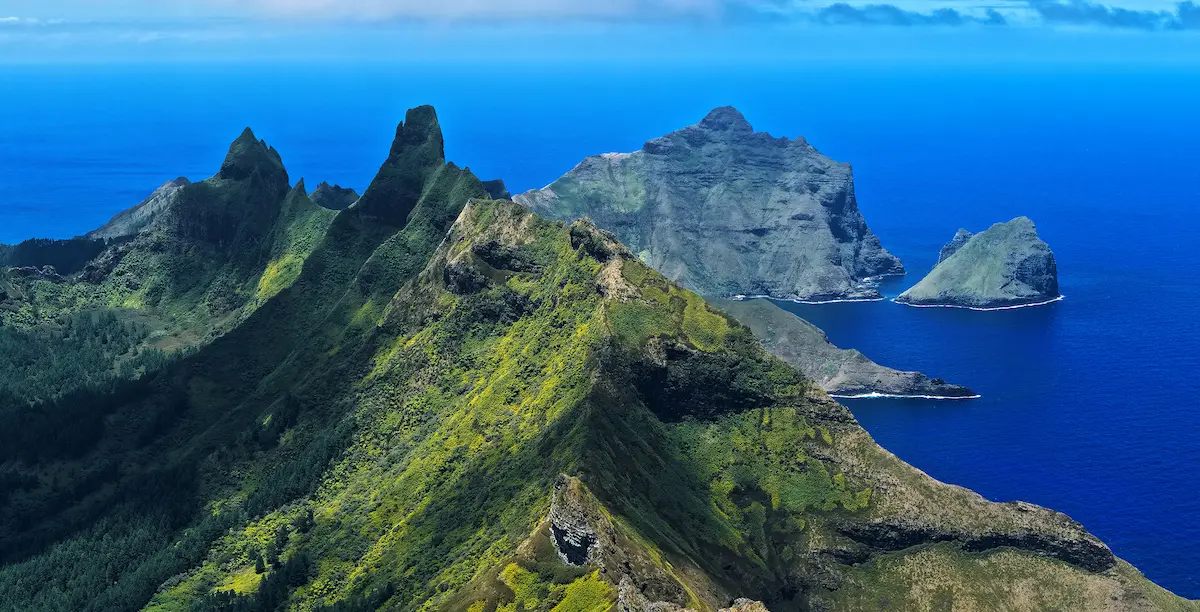
- Rapa: nearly 1,240 km, the southernmost and most isolated island in the whole of French Polynesia, with no air link at all.
Why is access still so difficult ?
Several factors compound one another, and none of them is about to change quickly. Together they explain why travel to the Austral Islands takes preparation that no other Polynesian archipelago demands.
There are no international flights to the Australs. Every traveller transits through Tahiti-Faa'a International Airport in Papeete.
Local infrastructure is modest: short runways, small aircraft, no night flying.
Weather weighs heavily. During the southern winter, wind and swell disrupt both air rotations and sea crossings.
Add to that a low level of tourist traffic, which does not justify adding commercial services. The archipelago is served in proportion to its population, not to visitor demand.
Reaching the Austral Islands by air with Air Tahiti
For most travellers, flying remains the fastest option. A single airline serves the archipelago from Papeete, which simplifies the search as much as it narrows the choice.
The existing flight connections
Air travel to the Australs rests entirely on Air Tahiti, departing from Tahiti-Faa'a. Four of the five islands have an airfield.
- Rurutu
- Tubuai
- Raivavae
- Rimatara
Rapa has no air link whatsoever. The island is reachable only by sea, which makes it the most demanding destination in the archipelago.
Frequencies and flight times
Rotations vary with the season and demand, and remain few. The figures below are indicative and should be confirmed at the time of booking.
| Island | Indicative frequency | Flight time |
|---|---|---|
| Rurutu | 2 to 3 flights a week | Around 1h30 |
| Tubuai | 2 to 3 flights a week | Around 1h45 |
| Raivavae | 1 to 2 flights a week | Around 2h, stopover possible |
| Rimatara | 1 to 2 flights a week | Around 1h40 |
Timetables can change at short notice depending on weather or operational constraints. Building in a margin is not excessive caution, it is a necessity.
Indicative fares and booking
Transport is often the heaviest line in the budget for a trip to the Austral Islands. Tickets cost noticeably more than standard inter-island flights in French Polynesia.
A Papeete-Rurutu return starts from around 35,000 XPF, roughly €290, depending on the period and the fare class.
Air Tahiti offers pass-type products that combine several islands, including certain Austral extensions. Conditions and eligible islands change, and should be checked when you book.
The hold baggage allowance is generally limited to 23 kg, with frequent surcharges beyond that.
What flying allows, and what it demands
Flying maximises your time on the ground, but transfers the entire organisational load onto you. Flights to the Austral Islands suit travellers who are comfortable building an itinerary alone.
The strengths: considerable time saved, a short journey, complete freedom over dates and accommodation.
The limits: no service to Rapa, low frequencies that make island-to-island connections precarious, weather-related delays and cancellations, and the obligation to arrange accommodation, transfers and activities on every island yourself.
The supply cargo ship, the islanders' sea route
Before it is a way for visitors to travel, the supply vessel is a public service. It provisions the five islands and carries a limited number of passengers, in conditions a long way removed from a cruise.
A service vessel first
The Tuhaa Pae IV supplies the Australs from the port of Papeete. It carries mainly freight, building materials and provisions, along with residents returning to their island.
Operational priority always goes to the cargo, never to passenger comfort. It is also the only regular way to reach Rapa, which makes it unavoidable for anyone wanting to see the archipelago in full.
Rotations and crossing times
Rotations are widely spaced and the schedule depends on freight volume. A sea crossing to the Austral Islands cannot be planned like a flight.
- Roughly two rotations a month, varying with the season
- Full circuit: ten to fourteen days
- Papeete to Rurutu: around 36 hours at sea
- Papeete to Rapa: four to five days at sea
Conditions on board
Comfort is basic: simple cabins or berths on deck depending on availability. Meals are included in the passage and stay simple, built around local cooking.
Passengers are mostly island residents, which gives the crossing a genuinely human dimension, but means accepting a spare setting. Booking is done directly with the company in Papeete, and places are few.
Seasickness is common on these crossings, particularly between July and August when the Maraamu raises a pronounced swell.
Travellers who are sensitive to motion should arrange suitable medication before boarding and ask about the position of their berth: roll is always less noticeable amidships.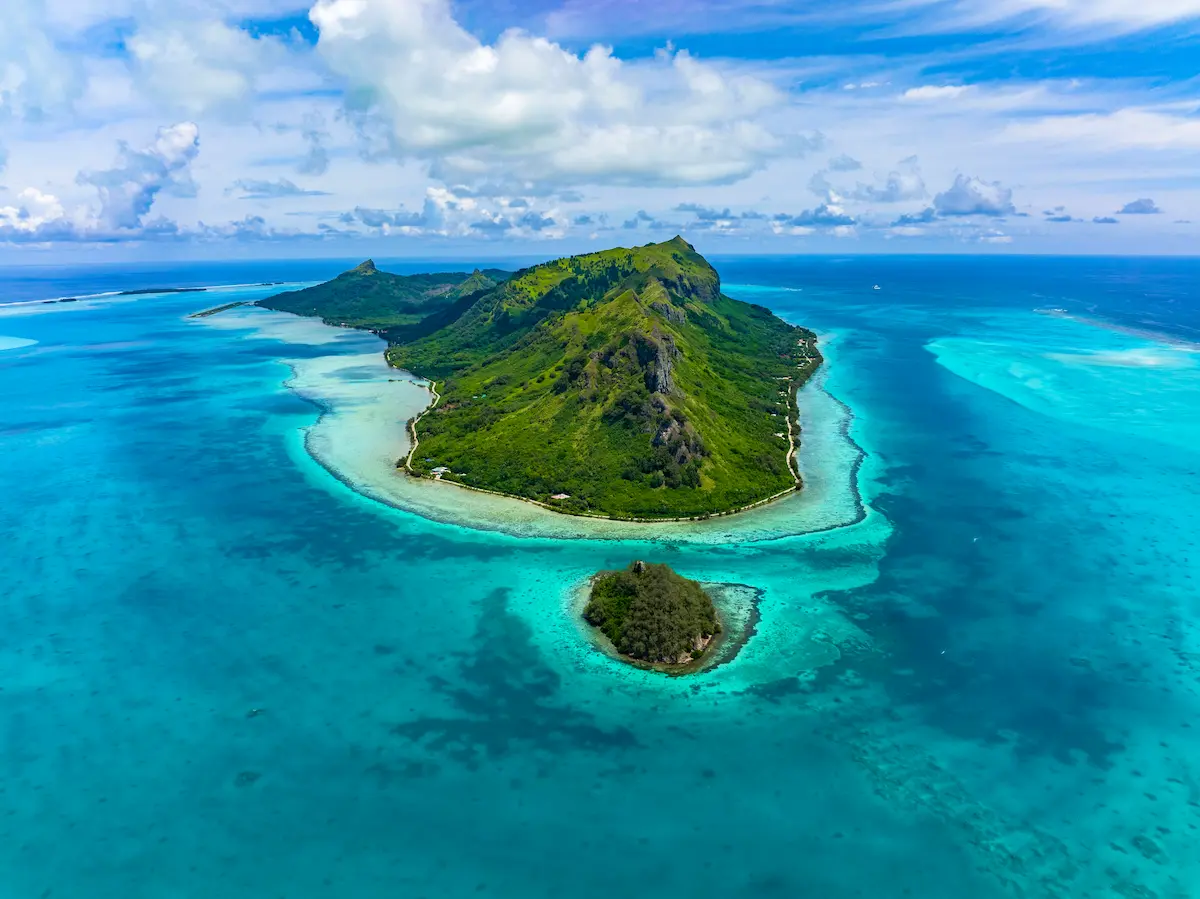
Visiting the Austral Islands aboard the Aranoa from March 2027
A third route will open in 2027. The Aranoa will carry forward the principle that has defined Aranui Cruises since 1984: a vessel that carries freight and travellers alike, serving the islands as much as those who come to discover them.
A mixed cargo-passenger vessel built for the archipelago
Aranui Cruises is a Polynesian family company, run by the Wong family, active in maritime transport since the 1950s. Its vessels sail under the French flag and the crew is almost entirely Polynesian, drawn from across the archipelagos.
With the Aranoa, the company will bring to the Australs the mixed cargo-passenger ship model it already operates towards the Marquesas. The vessel will enter service in March 2027 and will carry 198 passengers in 91 cabins, 62 of them with balconies.
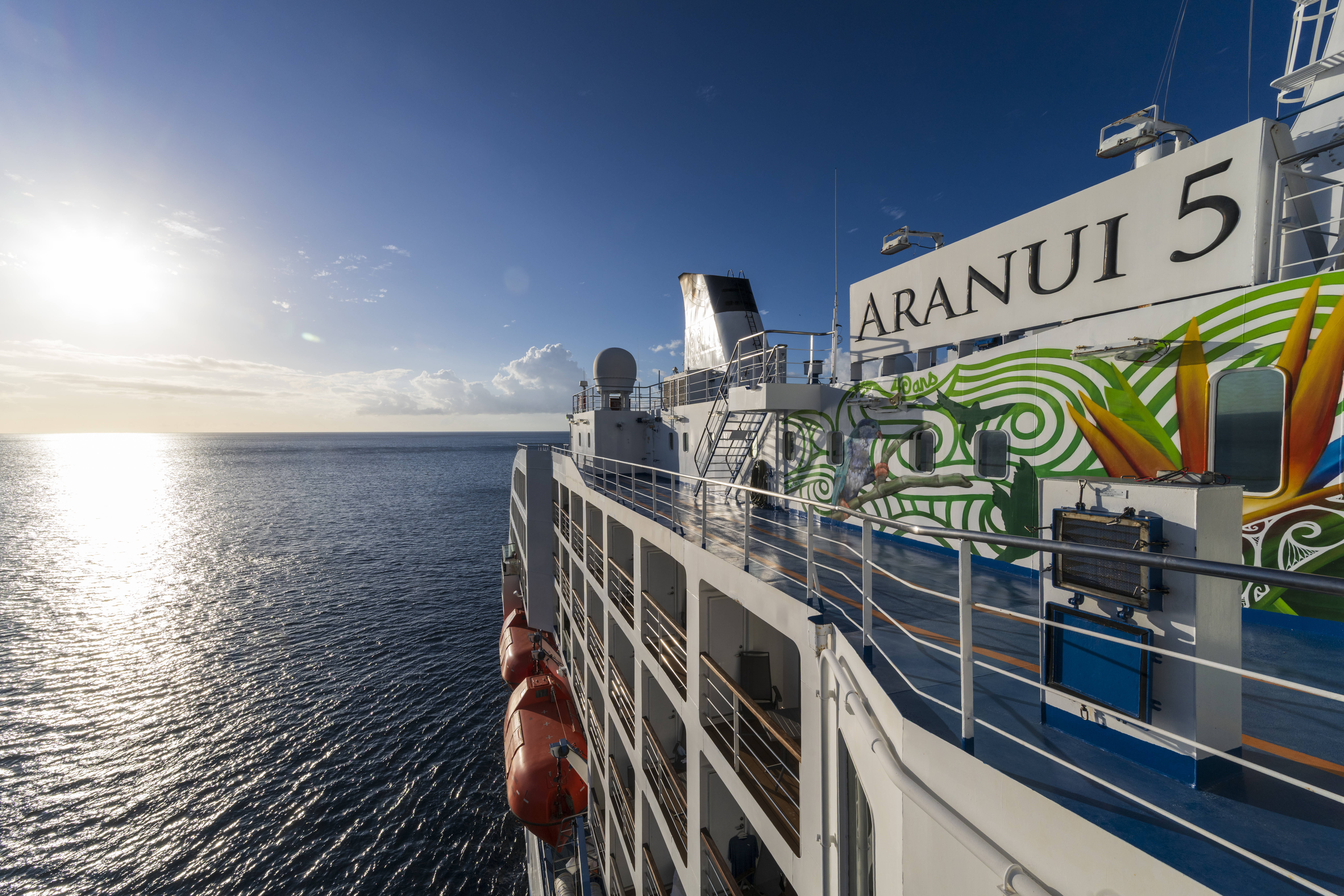
Unlike the Aranui 5, it will be fitted with stabilisers and diesel-electric propulsion, which should noticeably reduce roll on the long crossings south.
The onboard leisure facilities announced so far remain to be confirmed with the company.
Planned route and stopovers
The Aranoa will offer a round-trip itinerary from Papeete lasting thirteen days and twelve nights. The announced calls will cover the whole archipelago.
- Rurutu
- Rimatara
- Tubuai
- Raivavae
- Rapa, on selected rotations
Calls in the Society Islands, at Raiatea, Bora Bora or Maupiti, are planned depending on the departure.
One point deserves to be understood before booking. Stopovers in the Austral Islands will last three to five hours on average, as on every vessel in the fleet, because they are governed by cargo handling operations.
Passengers will sleep on board every night. These are not full days ashore but short, dense immersions, often at the moment when island life converges on the quay.
What will be included, and what will cost extra
Being clear on this point avoids disappointment. The planned package will simplify most of the logistics without covering everything.
Included in the fare: accommodation on board each night in an air-conditioned cabin with private bathroom, full board, the standard excursions on each island, transfers and cultural talks.
Charged separately: international and domestic flights, alcoholic drinks beyond the quarter-bottle of wine served with meals, certain paid visits ashore and optional services.
Internet access aboard Aranui vessels is limited and chargeable. The arrangements chosen for the Aranoa have not yet been announced.
Who this voyage will suit
The package will appeal to travellers who want to discover the archipelago without assembling complex logistics themselves, and who accept fixed dates and a set programme in exchange.
It will open up Rapa, almost impossible to reach otherwise, and will allow several islands to be seen in a single trip. It will suit less well those who want to settle on one island for several days.
Comparison: which way to visit the Austral Islands ?
Each option corresponds to a way of travelling, not to a level of quality. The table below sets out the real differences between the three routes.
| Criterion | Air (Air Tahiti) | Supply cargo ship | Aranoa, from March 2027 |
|---|---|---|---|
| Islands served | Rurutu, Tubuai, Raivavae, Rimatara | All five, Rapa included | All five, Rapa on selected rotations |
| Journey time | 1h30 to 2h from Papeete | 36 h to 5 days at sea | 13 days / 12 nights, full circuit |
| Frequency | 1 to 3 flights a week | Around 2 rotations a month | Departures scheduled in 2027 |
| Comfort | Short flight, adequate | Basic | Air-conditioned cabins, stabilised vessel |
| Time ashore | Free, on your own schedule | Variable, dictated by freight | Stopovers of 3 to 5 hours |
| Logistics | Entirely on you | Entirely on you | Handled by the company |
| Access to Rapa | No | Yes | Yes, on selected departures |
According to your travel profile
The right choice depends less on budget than on your relationship with the unexpected.
The independent traveller will favour flying and guesthouses. They build the trip to their own measure, absorb the frequency constraints and gain in freedom what they lose in organisational comfort.
The adventurous traveller will take the supply cargo ship: long durations, spare comfort, uncertain schedules, but a raw immersion alongside island residents and the only regular access to Rapa.
Those who would rather delegate the organising will wait for the Austral Islands cruise aboard the Aranoa, with a complete itinerary and structured calls, in exchange for fixed dates.
Getting around once you are there
Moving around within the Australs is simple because the options are limited. Few roads, few vehicles, short distances: the scale of the islands makes walking often sufficient.
Land transport
Most islands have a single coastal road with very little traffic. Car hire exists but vehicles are scarce, and booking generally goes through the guesthouses.
Cycling is an excellent alternative on the flatter islands such as Tubuai or Rimatara. Within the villages, everything is done on foot.
Sea links between the islands
There is no regular shuttle between the Austral Islands. Occasional passages on fishing boats can sometimes be negotiated locally, but they follow no reliable timetable and should never be built into a tight itinerary.
To see several islands in one trip, three options genuinely hold up: chaining Air Tahiti flights while accepting nights of waiting, boarding the supply cargo ship, or from 2027 taking the Aranoa sailing schedule.
Planning your trip to the Austral Islands: what to watch
The archipelago is unforgiving of improvisation. Transport and accommodation capacity are both limited, and one missed booking can push a whole trip back by weeks.
Book well in advance
For Air Tahiti flights, allow two to three months minimum in high season. For the cargo ship, contact the company very early: passenger places are marginal next to the freight.
For the Aranoa, demand on the first departures is expected to be strong as soon as sales open, the archipelago never having been served by a dedicated vessel.
Build in safety margins
Weather disruption is frequent in this part of the South Pacific, and flight cancellations just as much.
Allow one or two nights in Papeete before and after your stay rather than connecting straight onto an international flight. Insurance covering cancellation and repatriation is strongly advised.
Prepare for self-sufficiency
The Australs offer no conventional tourist infrastructure. Accommodation is in guesthouses; there are no hotels.
Cash machines are rare, so carry enough cash in CFP francs. Local shops hold limited and irregular stock, dependent on the cargo ship's arrival.
Essentials and personal medication should be brought from Tahiti.
The Austral Islands, an archipelago you have to earn
Reaching these five islands takes time, planning and a real capacity to adapt. That is precisely what has preserved them: a culture still very much alive, some of the wildest landscapes in French Polynesia, and communities for whom the arrival of a ship remains an event.
Flying stays the most direct route for anyone in a hurry. The supply cargo ship remains the rawest experience, and the only one that regularly reaches Rapa.
From March 2027, the Aranoa will open a third way to visit the Austral Islands, in the spirit that has guided Aranui Cruises for forty years: a vessel that carries the lifeline to the islands and takes along, on the way, those who want to discover them differently.
Looking at the departures announced for 2027 already makes this voyage far simpler to plan than it once was.
Continue exploring the Polynesian archipelagos with Aranui :
- Cruise to Bora Bora
- Cruise to Tahiti
- Marquesas Islands cruises
- Austral Islands cruise
- Cook Islands cruise
- Pitcairn Island cruise
- Society Islands cruise
- Tuamotu Islands cruise
- Gambier Islands cruise
Frequently asked questions about reaching the Austral Islands
Do you need a visa for the Austral Islands ?
The Australs are part of French Polynesia, a French overseas collectivity. French and European nationals need only a valid identity card or passport.
Other nationalities fall under the formalities that apply to the Polynesian territory and should check their obligations before departure, as entry conditions can change.
Is seasickness a problem on a trip to the Austral Islands ?
It is worth taking seriously. The crossings south are long and the swell can be pronounced, particularly between July and August when the Maraamu blows.
The Aranui 5 has no stabilisers. The Aranoa will be fitted with them, which should reduce roll. Preventive medication and a cabin amidships remain the best precautions.
Can you use a mobile phone or the internet in the Austral Islands ?
Mobile coverage exists in the main villages but is uneven, and disappears as soon as you move away. Aboard the company's vessels, the connection is limited and chargeable.
Warn family and friends that you will be hard to reach for several days, particularly on the crossings to Rapa.
Can you see whales during a stay in the Austral Islands ?
Yes, chiefly at Rurutu, where humpback whales come to calve between July and October. The island is one of the few places in the world where they can be watched from the shore.
That season coincides with the roughest months at sea, so there is a trade-off between the whales and comfortable sailing.
Can you combine the Austral Islands with the Marquesas ?
No. The two archipelagos sit at opposite ends of French Polynesia and never appear on the same itinerary. The Marquesas are reached from Tahiti to the north-east, the Australs to the south.
You have to choose, or plan two separate trips. Our Austral Islands page helps place the archipelago in relation to the other destinations.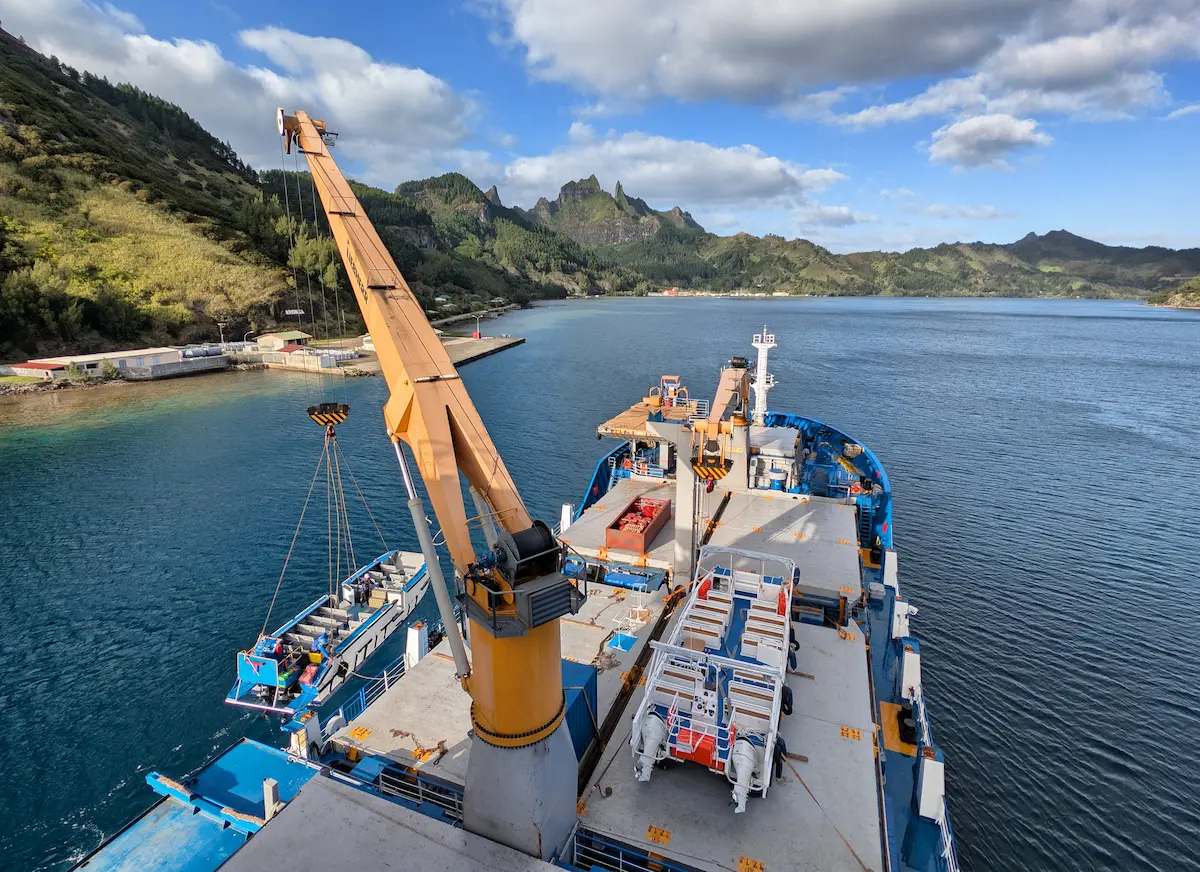
Read also